Checked sellers. Open prices.
Nothing hidden in between.
CropBid is a marketplace for food. Farms, local shops and wholesalers apply to sell here and are reviewed before they can trade. They list at their own price, anchored to the day's government mandi rate. Businesses bid or order in bulk, households buy by the kilo from a shop they can name, and the money waits in escrow until it's delivered. That's the whole idea.
A deal in four steps.
From the field to the buyer's gate — without the farmer ever leaving home.
Sellers apply, we review
Farms, local shops and wholesalers each answer a different form and hand over the licence their trade needs. A person reads every application before anyone can sell.
Approved sellers list stock
Crop, quantity, quality and their own asking price — from a phone, without travelling to the mandi.
Buyers bid, or just buy
Businesses bid in open rounds where every offer is visible, or post what they need and let farmers fill it. Households buy off a shop's shelf at the listed price.
We move it, escrow settles
The buyer pays up front and the money sits on the platform. We book the carrier rather than leaving it to the seller, so the delivery is ours to answer for, and the seller is paid out once the buyer confirms it arrived.
Not a marketplace anyone can walk into.
Farms, local shops and wholesalers sell here — but only after we've checked them. That gate is the product: it is why a buyer can trust a name they have never bought from before.
Farms
Sell your own harvest by the quintal or tonne to businesses nationwide, and by the kilo to households in your city.
Local shops
A kirana, a dairy counter or a fruit stall. Your own shopfront on CropBid, with your name on it and today's delivery.
Wholesalers
Move volume through the auctions and the demand board, with your firm and GSTIN on the record.
Say what you are
A farm, a local shop or a wholesale firm. You pick first, and the form you get asks for that trade and nothing else: acreage and crops for a farm, FSSAI and an address for a shop, GSTIN for a firm.
We review
A real person checks it, usually within 24–48 hours. If something is missing we ask for it — you don't start over.
Go live
Approved partners get the full dashboard: listings, orders, bids, deliveries, analytics. You can trade the same day.
Two things to know before you apply. You keep your own prices: we never set them, and every listing shows the day's government mandi rate beside yours so the buyer is arguing with the market and not with you. And we book the transport rather than you, which means the freight is billed to the seller and shows as its own line on the settlement.
You are buying from a shop,
not from an algorithm.
Pick your city, pick a shop, buy what is on its shelf. We do not merge every seller's tomatoes into one anonymous card, because the shop you have bought from for years is the thing worth keeping.
Local shops, today
Kiranas, dairies and fruit stalls near you, each with their own shopfront and their own prices. Order in the day and it comes the same day.
Fresh from the farm, tomorrow
Produce bought at tomorrow's mandi run and delivered that morning. It is a batch rather than a speed: there is one run a day, and what you order joins the next one.
The small print, up front. Household delivery runs in Nagpur only for now, and you can only buy from sellers in your own city, because a few kilos of vegetables cannot be freighted across the country. Produce is priced by the kilo and sold from 500 g up. Your basket is ordered one shop at a time, because each shop makes its own delivery, and delivery is free on ₹200 or more from a shop, and ₹30 below that: a delivery run costs the same whether it carries ₹60 of coriander or ₹600 of groceries. Signing up takes a name, an email or phone number and a password, and you only need it at checkout.
Know the numbers
before you harvest.
A lot doesn't get judged on how it looks. At a mandi, a processor's gate or an exporter's warehouse, it is measured against limits that are published in the open — and most farmers never see them. Pick a crop to read them.
Soybean
FAQ specification · Price Support Scheme (NAFED / NCCF)- Moisture≤ 12%
Damp beans heat up inside the bag and turn mouldy before they ever reach the crusher.
- Foreign matter & impurities≤ 2%
Soil, stones and stray pods — weight the buyer would otherwise pay soybean rates for.
- Shrivelled, immature & pale beans≤ 5%
Thin beans crush to less oil, so the lot is worth less than the scale says.
- Weevilled & damaged beans≤ 5%
Insect-bored beans carry the infestation into the rest of the consignment.
Worth knowing — After unseasonal rain in Kharif 2024–25 the centre relaxed procurement to 15% moisture — but MSP was still paid on the 12% basis, with the difference adjusted down the chain.
About the grade on a listing. The A/B/C grade you see on CropBid is the farmer's own declaration — we don't test lots, and the grade is not calculated from the limits above. Treat it as the seller's claim, and use what sits alongside it: photos of the actual lot, a lab report where the farmer has one, and a minimum grade you can set on a requirement so nobody wastes a trip.
Every limit is a published standard, none of them ours: FCI and Dept. of Food & Public Distribution uniform specifications for foodgrains, the Price Support Scheme FAQ specification for oilseeds, FSSAI food product standards, AGMARK grades, and ISO 2451 for cocoa. Foodgrains are analysed by the BIS methods in IS 4333 (Part I and Part II), cocoa by the cut test in IS 8832. Cocoa's cadmium figure is the EU limit, because that is the one that governs the export.
Today's real mandi price,
on every crop.
We pull daily wholesale prices from 4,600+ government-regulated mandis (Agmarknet). Both sides see the same number, so nobody negotiates blind.
And where the price
goes next.
Our model reads today's arrivals, the harvest calendar and live demand, then says it plainly: rising, steady or easing over the next 7 days — with the reasons attached.
Everything here ships right now.
No roadmap promises. Sign up and all of this is on your dashboard today.
Live auctions
Open bidding rounds on bulk lots — every offer visible, updated in real time.
Counter-offers
Not happy with a bid? Counter it. The whole conversation stays on the record.
Demand board
Buyers post what they need and at what price. Farmers fill it outright or come back with an offer.
Agents that haggle for you
Set your floor, your ceiling and how hard to push. When both sides have an agent switched on, either can hand a bid over and let the two of them settle it, every round written down.
We book the truck, not you
One less thing for a farmer to arrange, and a delivery the platform answers for instead of a number the seller gave you. The seller pays the freight, and both sides follow the deal: paid → shipped → delivered.
Govt schemes hub
PM-KISAN to KCC — 12 schemes explained in English and Hindi, with how to apply.
No anonymous sellers
Every seller is a reviewed partner with a name, a place, and the licence their trade needs: FSSAI for a food shop, GSTIN for a wholesale firm.
Sign up in a minute
Your name, an email or phone number, and a password. English, Hindi or Marathi, on the site or the app.
Simple, like the rest of it.
One fee, and only when a deal actually settles.
to join, list and browse
Applying, listing a crop, browsing the market, rates and the forecast all cost nothing. There is no signup fee.
only when a deal settles
One flat fee on completed deals. No subscriptions.
of the money in escrow
Held on-platform from payment until confirmed delivery. Nobody can run with it.
What is not in the 2%. Transport is charged separately and on top, at what the carrier quotes, and it is billed to the seller. Households pay ₹30 for delivery when a shop's items in their order come to less than ₹200, and nothing from ₹200 up; that charge is CropBid's, not the seller's. Those two are the only other numbers there are.
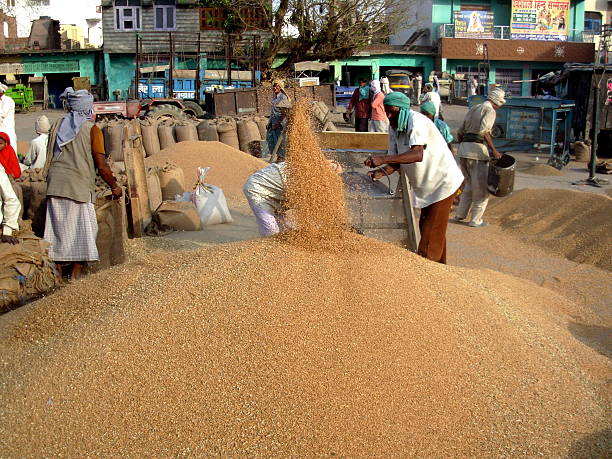
“Every harvest, growers lose margin to prices they never get to see. CropBid checks every seller at the door, runs the bidding in the open against the day's government rate, and moves the goods itself — so a farmer gets a fair price without ever leaving the field, and a household knows whose shop it came from.”
Stop guessing prices.
Start trading in the open.
List your first lot, place your first bid, or fill your kitchen from a shop down the road. Live mandi rates, open bidding, escrow settlement — bring your crop, we'll bring the market.